
Manual of Pastas and Clays
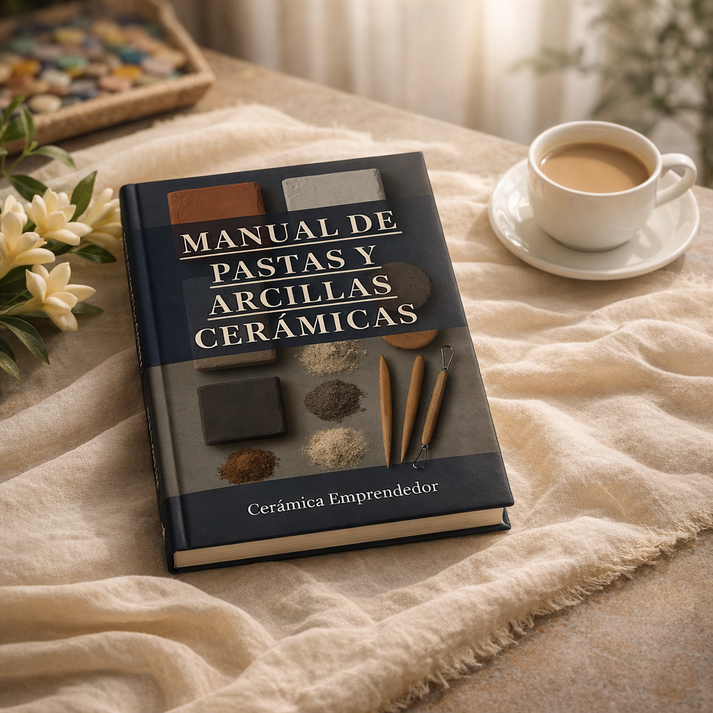
Manual of Ceramic Bodies and Clays
Learn to master the composition, types, preparation, defects, uses, and techniques of all ceramic bodies and clays, from basic to advanced.
Buy
📖 Total pages: 70
Table of contents 🎯
(Includes theory + examples + practical recipes)
1. Introduction to the World of Ceramic Bodies
- What are ceramic bodies
- Differences between clay, body, and mud
- General classification of bodies
2. Composition and Raw Materials
- Main components of a ceramic body
- Plastic and non-plastic materials
- What is plasticity and how it influences
3. Types of Ceramic Bodies
- Low-temperature body (terracotta, red clay)
- Mid-temperature body (stoneware)
- High-temperature body (porcelain)
- Comparison between them
4. Preparation and Properties of Bodies
- Kneading and homogenization processes
- Clay recycling techniques
- Physical and mechanical properties
5. States of Clay
- Raw / plastic state
- Leather-hard state
- Bone dry / dry state
- Bisque state
- What to do and what not to do in each state
6. Common Defects and How to Avoid Them
- Cracks, bubbles, and porosity
- Deformations and shrinkages
- How to prevent defects from preparation
7. Color and Texture of Bodies
- Influence of composition on color
- Use of pigments and oxides in the body
- Grog, grog, and textural additives
8. Special and Experimental Bodies
- Paper clay bodies
- Refractory bodies
- Self-built bodies with local materials
9. Use of Bodies According to Ceramic Technique
- Bodies for throwing
- Bodies for hand modeling
- Bodies for casting (slip)
10. Drying, Firing, and Practical Recipes
- Drying according to each type of body
- Shrinkage and firing curves
- Homemade body formulas
- Adaptations for different techniques
